 Skip-the-line available
 Romeo and Juliet — The Literary Background
Shakespeare's 1594 play was based on earlier Italian novellas. Here's the 200-year literary chain that led to the Verona setting.
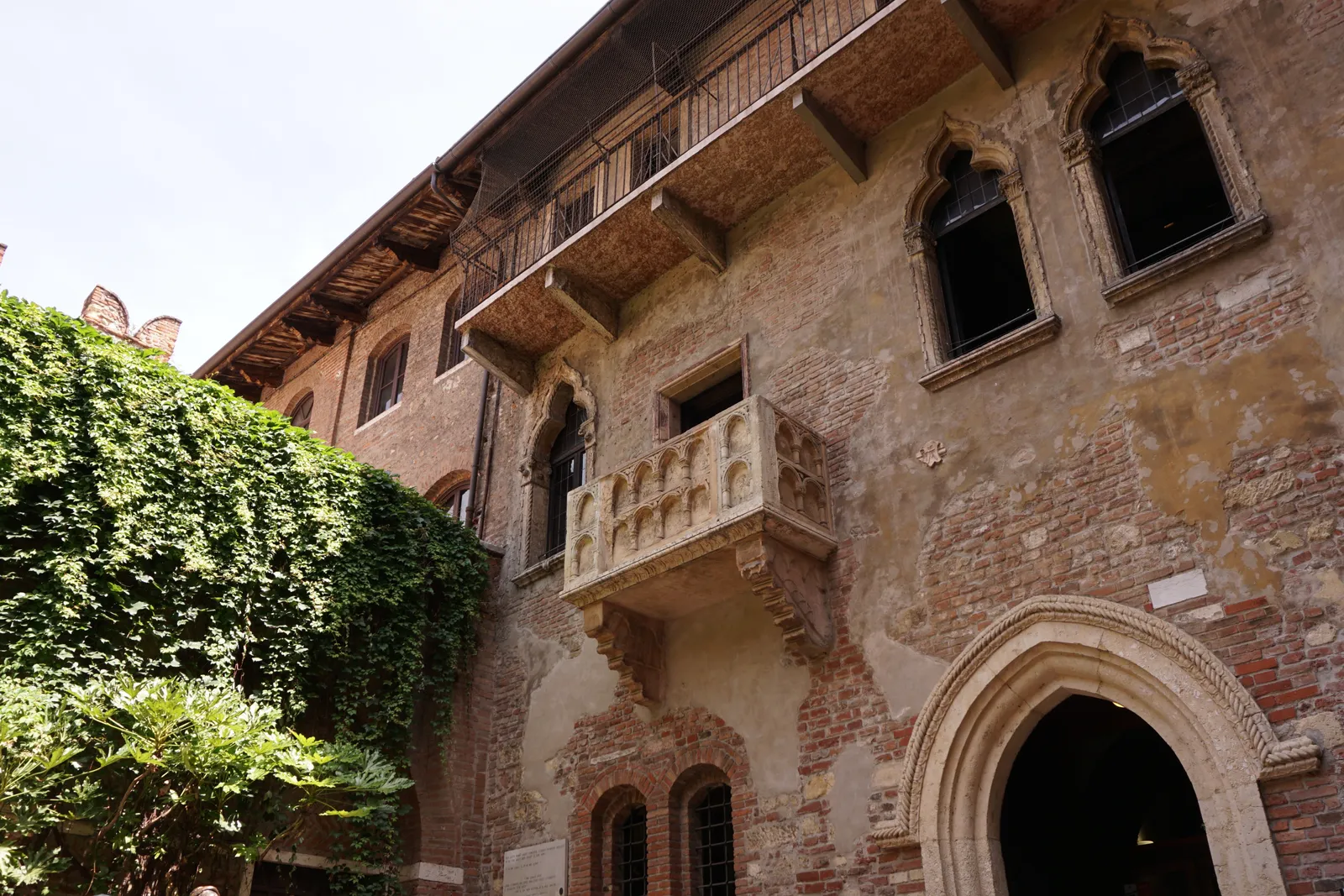
Shakespeare's Romeo and Juliet (1594) is the most famous version of the story — but he didn't invent it. The narrative chain runs back through earlier Italian novellas to a 16th-century Vicenza writer who set the story in Verona. Here's the literary background that explains why Verona — and the Casa di Giulietta — became the setting for a love story that none of the characters actually lived through.
The narrative chain
The story's earliest documented form is in Luigi Da Porto's 'Historia novellamente ritrovata di due nobili amanti' ('Newly Discovered History of Two Noble Lovers'), published around 1531. Da Porto, a Vicenza writer, set the story in Verona and named the families Montecchi and Capuleti — two families mentioned in Dante's Purgatorio (canto VI). The lovers, named Romeo and Giulietta, end with the famous double suicide.
Matteo Bandello expanded the story in his 'Novelle' (1554), giving it more dramatic detail. Pierre Boaistuau translated Bandello's version into French (1559). Arthur Brooke produced an English verse adaptation ('The Tragicall Historye of Romeus and Juliet', 1562). Shakespeare's Romeo and Juliet (1594) is based directly on Brooke's English version. So the chain is: Da Porto 1531 → Bandello 1554 → Boaistuau 1559 → Brooke 1562 → Shakespeare 1594.
Why Verona
Luigi Da Porto's choice of Verona for the setting may have been romantic or political. The Montecchi and Capuleti families ARE mentioned in Dante (Purgatorio VI, line 106): 'Vieni a veder Montecchi e Cappelletti, / Monaldi e Filippeschi, uom sanza cura' — Dante refers to the Verona-Vicenza factional conflicts of the 13th-14th century. Da Porto, writing in 1531, may have been deliberately evoking Dante's references.
Verona in the early 16th century was a Venetian-ruled provincial city. Setting a tragic love story there gave Da Porto's narrative a sense of place — recognisable to Italian readers — without the political dangers of setting it in Venice or Milan. The Cappello family who actually lived at what became the Casa di Giulietta were chosen by Verona's tourism authority in the early 20th century because Capello → Capulet, the closest match in Verona archives.
Shakespeare's contribution
Shakespeare worked from Brooke's English verse adaptation and Bandello's prose narrative (in Painter's English translation, 1567). His major changes: compressing the timeline from 9 months to 4-5 days, deepening character psychology (especially of Juliet and the Nurse), and writing language that has lasted 430 years where the earlier versions are now read only by specialists. The famous balcony scene was Shakespeare's invention.
Shakespeare almost certainly never visited Verona. His version contains Italian local-colour details (the Pope, the Friar's herbs, Mercutio's references) that come from English translations of the Italian sources rather than first-hand observation. Some scholars argue this is part of why his version became universal — it's set in 'Italy' as imagined from England, rather than the specific Verona of the Italian sources. The universality is what gives Casa di Giulietta its global resonance today.
Frequently asked
Did Shakespeare invent Romeo and Juliet?
No — Shakespeare's 1594 version is the most famous, but the story goes back through earlier writers. The chain is: Da Porto 1531 (the Verona setting and the family names) → Bandello 1554 → Boaistuau 1559 → Brooke 1562 → Shakespeare 1594. Shakespeare's version is artistically transformative but builds on existing material.
Were Romeo and Juliet real people?
No — they are fictional characters. The Montecchi and Capuleti families are mentioned in Dante's Purgatorio as Verona-Vicenza factions of the 13th-14th century, but there's no historical record of any specific Romeo or Juliet figures. The literary creation pre-dates Shakespeare by 60+ years (Da Porto, 1531).
Did Shakespeare visit Verona?
Almost certainly not. There's no documentary evidence of Shakespeare travelling outside England. His 'Italian' setting comes from English translations of Italian sources — Brooke's English verse adaptation (1562) and Painter's translation of Bandello. The Italian local-colour details in the play come from books, not first-hand observation.
What's the famous Da Porto 1531 version like?
Luigi Da Porto's 'Historia novellamente ritrovata di due nobili amanti' is a prose novella in Italian, about 30 pages. Set in Verona. Lovers named Romeo and Giulietta. The double suicide is present. Available in modern Italian editions and English translations; rarely read outside specialist literature programmes.
Who is mentioned in Dante's Purgatorio?
The Montecchi and Cappelletti (the latter being closer to Italian 'capuletti') — two Verona-Vicenza factional families mentioned in Dante's Purgatorio canto VI, line 106. Dante refers to their conflicts as an example of political strife. Da Porto, writing 230 years later, may have been deliberately evoking Dante's references.
Was the balcony scene in Shakespeare or earlier?
The balcony scene appears to be Shakespeare's invention. Earlier versions (Da Porto, Bandello, Brooke) have lovers meeting in various ways but not the famous balcony exchange. Shakespeare's balcony scene is one of the most-quoted moments in Western literature and influenced subsequent stage and film adaptations.