 Skip-the-line available
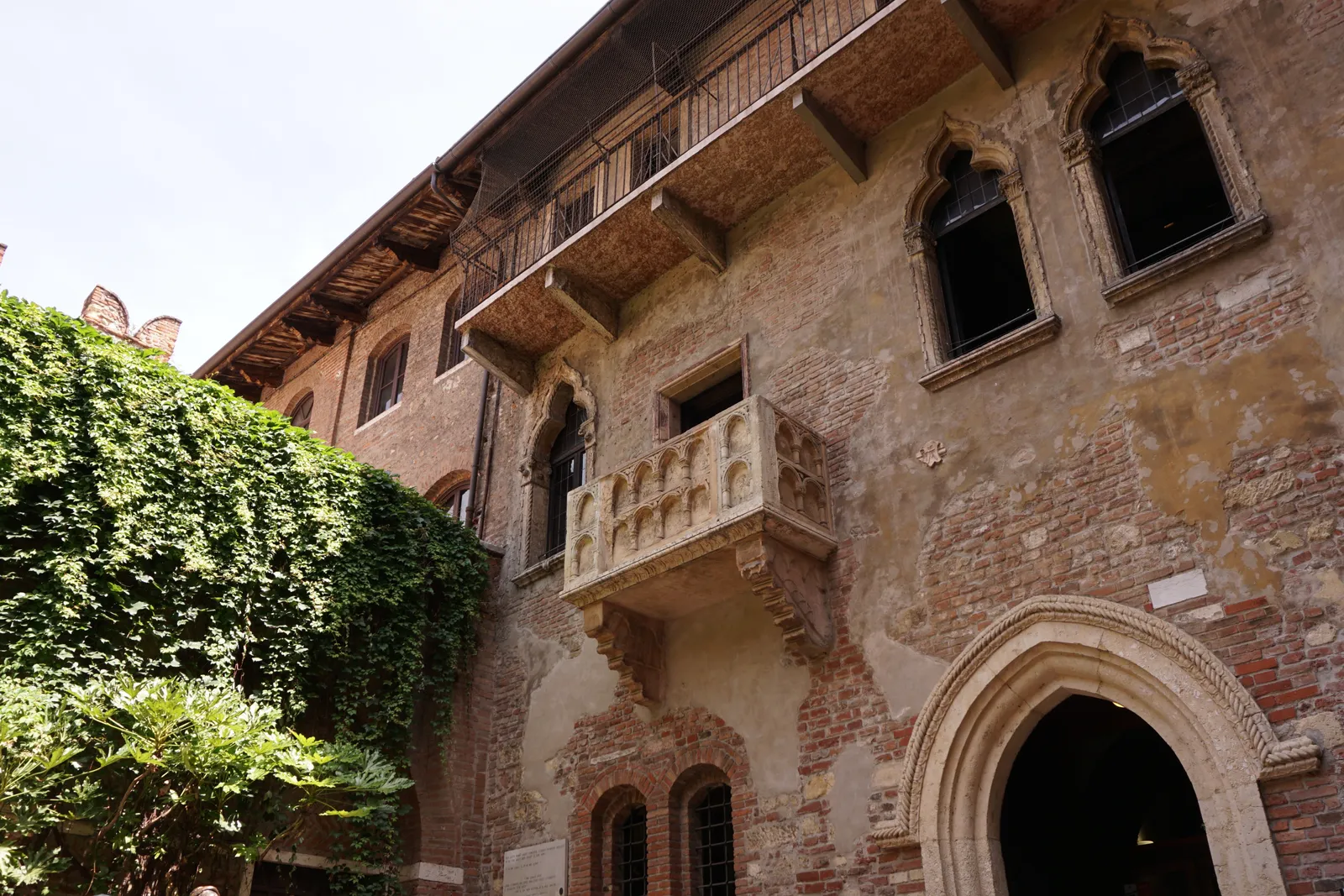
 The Casa di Giulietta Balcony — Built 1939
The famous balcony was added in 1939 to a medieval sarcophagus design. The real history of Verona's most-photographed architectural feature.
The famous balcony at Casa di Giulietta — where countless photos are taken every day — was added to the building in 1939. The medieval house itself is genuine, but the balcony is a 20th-century addition designed by city curator Antonio Avena from a 14th-century sarcophagus to match an imagined Shakespearean scene. Here's the honest history.
The 1939 addition
The Casa di Giulietta is a 13th-century brick tower house belonging to the Cappello family (chosen because Capello sounds like Capulet — the family in Shakespeare's play). The municipality of Verona acquired the building in 1905 and began promoting it as the 'house of Juliet'. In 1936-1939, city heritage curator Antonio Avena commissioned the addition of the balcony to give visitors the architectural feature they expected from the Romeo and Juliet narrative.
The balcony itself was sculpted from a Veronese marble sarcophagus dating to the 13th-14th century — Avena selected and modified the medieval stone to suit the Renaissance balcony design. The result is a balcony that combines genuinely medieval material with a 20th-century design intention. The Cappello family arms (a hat) were carved into the courtyard wall to reinforce the Shakespeare connection.
Why it's famous despite being modern
The Casa di Giulietta receives over a million visitors annually, most of whom photograph the balcony. The popularity rests on the literary association rather than architectural authenticity — visitors who know the 1939 history still enjoy the visit; visitors who don't know often discover the date on the placard inside and feel slightly disappointed.
The honest framing: the medieval house IS genuine 13th-century, and the courtyard is original. The balcony is a 1939 addition but uses genuinely medieval material. The Casa di Giulietta is best understood as a literary-tourism site celebrating Shakespeare's narrative rather than a strict historical building. Most visitors who go with realistic expectations enjoy the visit; those expecting Shakespeare's actual setting are inevitably disappointed.
The bronze Juliet statue
The bronze statue of Juliet in the courtyard was added in 1973 by sculptor Nereo Costantini, gifted by the Lions Club of Verona. The right breast of the statue is shiny from being touched — a tradition (originating in the 1990s as far as anyone can date it) that touching it brings luck in love. The Verona municipality replaced the original statue in 2014 with a replica because tourists' touching had worn away the bronze; the original is now in a museum.
Photography of the statue is permitted but expect queues for the touch-and-photo pose. The most-photographed position is from the side, with the balcony in the background. The bronze is best photographed in late afternoon light when the warm tones of the patina read against the medieval brick of the surrounding walls.
Frequently asked
When was the Casa di Giulietta balcony built?
In 1939 by city curator Antonio Avena, using a 13th-14th-century marble sarcophagus modified into balcony design. The medieval house itself is genuine 13th-century, but the famous balcony is a 20th-century addition.
Did Juliet actually live at the Casa di Giulietta?
No — Juliet is a fictional character from Shakespeare's play (1594). The Casa di Giulietta is a real 13th-century Verona house that belonged to the Cappello family; the family name was chosen by Verona municipality in the early 20th century because it sounds like Shakespeare's Capulet. There is no historical evidence of any real Juliet living there.
Why does everyone touch the Juliet statue's breast?
A tourism tradition originating around the 1990s — touching the right breast of the bronze statue is said to bring luck in love. The original statue was so worn from touching that the Verona municipality replaced it with a replica in 2014; the original is in a museum.
Can I stand on the balcony?
Yes — visitors with a ticket to Casa di Giulietta interior can step out onto the balcony for the iconic photo. Queues are typically 15-30 minutes during peak season. The balcony only holds about 4 people at a time; expect a brief moment for the photo before moving on.
Is the courtyard free to visit?
As of April 2026 — no. Both the courtyard and the house interior require a ticket. The previous free courtyard access was changed in 2026; entry is now via the Teatro Nuovo on Piazzetta Navona, and a ticket is required to view the courtyard and balcony from below.
What's the original sarcophagus material?
Veronese rosso marble, a pinkish-red marble characteristic of the Verona region. The 13th-14th-century sarcophagus was a medieval funerary monument; Avena reshaped it into a balcony front in 1939, retaining the original carved decoration and adapting it for the new function.