 Skip-the-line available
 Photographing Casa di Giulietta — The Balcony Without 200 Tourists
How to capture the famous balcony and the bronze Juliet without the dense midday crowd. Best hours, angles and post-processing tips.
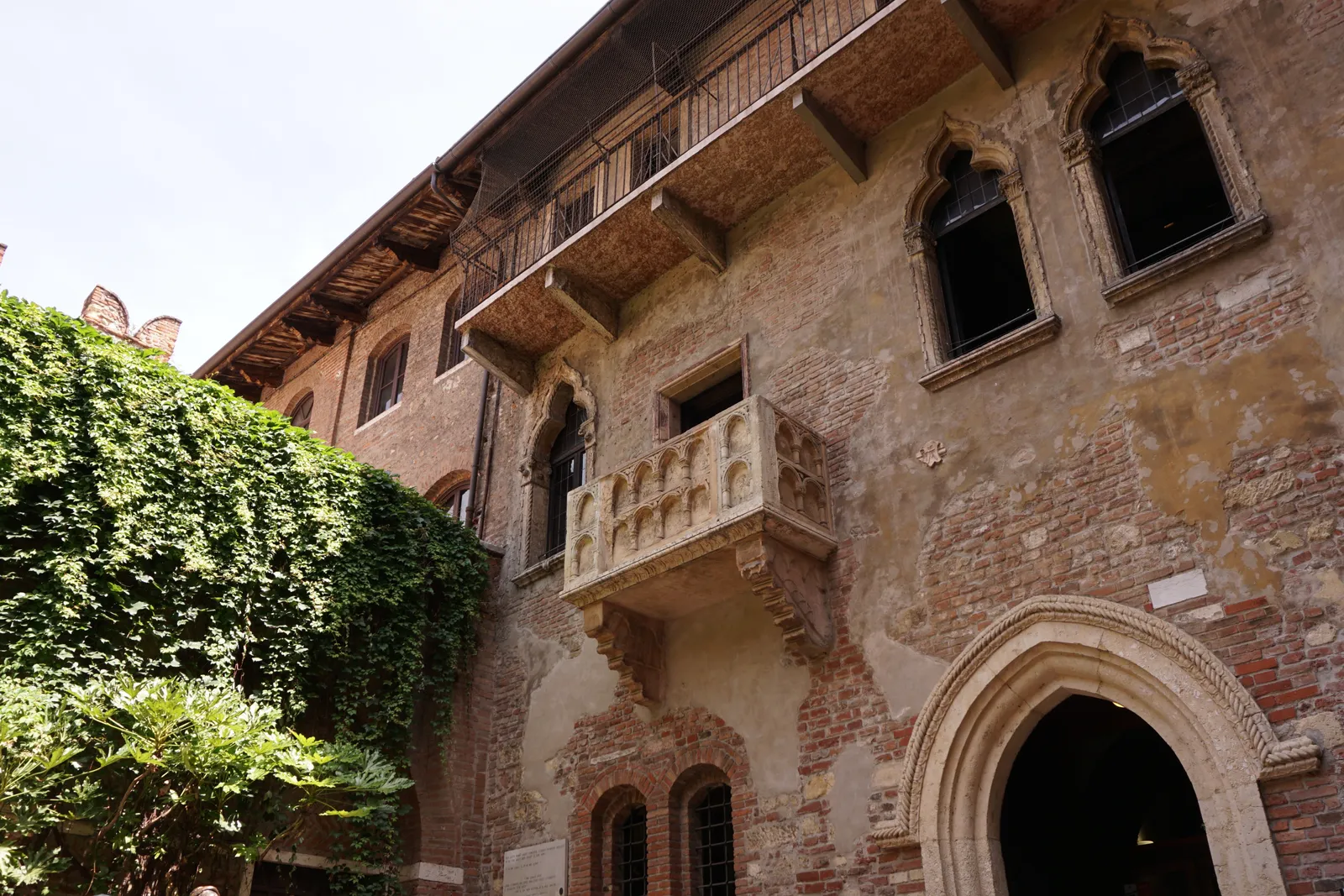
The Casa di Giulietta gets over a million visitors a year — and on a peak summer afternoon, the courtyard holds 200-300 tourists at once. Most quick smartphone photos disappoint because of the dense crowd in the frame. This guide is the timing and angles that produce clean photographs of the balcony and the bronze Juliet.
Best time of day
08:30-10:00 is the best window — Casa di Giulietta typically opens at 09:00, the morning courtyard is far less crowded than midday, and the warm low light reads better on the medieval brick walls than midday sun. Photographers willing to arrive at opening can sometimes get the balcony entirely without other tourists for 5-10 minutes.
Late afternoon, 90 minutes before sunset, is the second-best window — warm golden light on the bronze Juliet statue, fewer day-trippers (Verona is a 1-hour drive from Venice, most coach tours have left by 17:00), and the medieval brick walls catch the late light beautifully. Avoid 11:00-15:00 in any season — peak crowds, harsh overhead light.
Best angles
The classic balcony photograph is from the centre of the courtyard looking up at the balcony. Take it from the corner opposite the balcony — the angle is slightly oblique but avoids the row of waiting tourists right below. Phone cameras with 2x zoom handle this well. SLR users with a 35-50mm equivalent lens get the cleanest framing.
The bronze Juliet statue from the front shows the right-breast tourism tradition (and the queue to participate). For a quieter alternative, photograph the statue from the side, with the medieval brick wall as background. The corner where the bronze meets the wall produces a strong asymmetric composition that few visitors capture. The plaster wall covered with love notes (in the courtyard interior) is another distinctive subject.
Technical notes
The courtyard has high walls on three sides and the balcony on the fourth, creating significant shadow during much of the day. Mobile cameras with HDR mode handle this well. SLR users should bracket exposures. The bronze Juliet is dark against the brick — exposure compensation +0.5 to +1 stop usually balances it.
Tripods are generally not allowed in the courtyard (space is too tight). Phone photography is the norm. Flash is permitted but generally counter-productive — natural light or the dim courtyard ambient works better than direct flash on the bronze patina. Selfie sticks are tolerated; many visitors use them for the balcony selfie.
Frequently asked
When is the Casa di Giulietta courtyard least crowded?
08:30-10:00 (right after opening) and after 17:00 (post-day-trip return). The 11:00-15:00 window is the peak crowd, with the courtyard holding 200-300 people. Morning visitors typically get 5-10 minutes of relative quiet.
Can I photograph the bronze Juliet statue freely?
Yes — personal photography permitted, no fee. Expect a queue at the standard front-on touch-the-statue position. Side angles avoid the queue and produce more distinctive photographs.
Is photography from the balcony allowed?
Yes — visitors with a ticket to the interior can step out onto the balcony and take photos looking down into the courtyard. The balcony only holds 4 people at a time; expect a brief moment before moving on. The view from the balcony is the iconic 'Romeo' viewpoint.
Are tripods allowed?
Generally not in the courtyard — space is too tight and the volume of visitors makes tripods impractical. Phone photography is the norm. Selfie sticks are tolerated.
What's the best camera setting?
Smartphone HDR mode handles the high-contrast courtyard well. SLR users should bracket exposures or use exposure compensation +0.5 to +1 for the bronze statue. Wide-angle lenses (24-35mm equivalent) for the balcony from the courtyard centre; standard lens (35-50mm) from the corner.
What's the iconic Casa di Giulietta photograph?
Two: the balcony with the bronze Juliet visible below (classic shot from the corner of the courtyard) and the bronze Juliet up close (with patina detail). The plaster wall covered with love notes is a third distinctive subject.