 Skip-the-line available
 Getting to Juliet's House from Lake Garda
How to reach Casa di Giulietta from Peschiera, Desenzano, Sirmione and the Garda shore — the train that beats the car, the ZTL trap, and where driving actually makes sense.
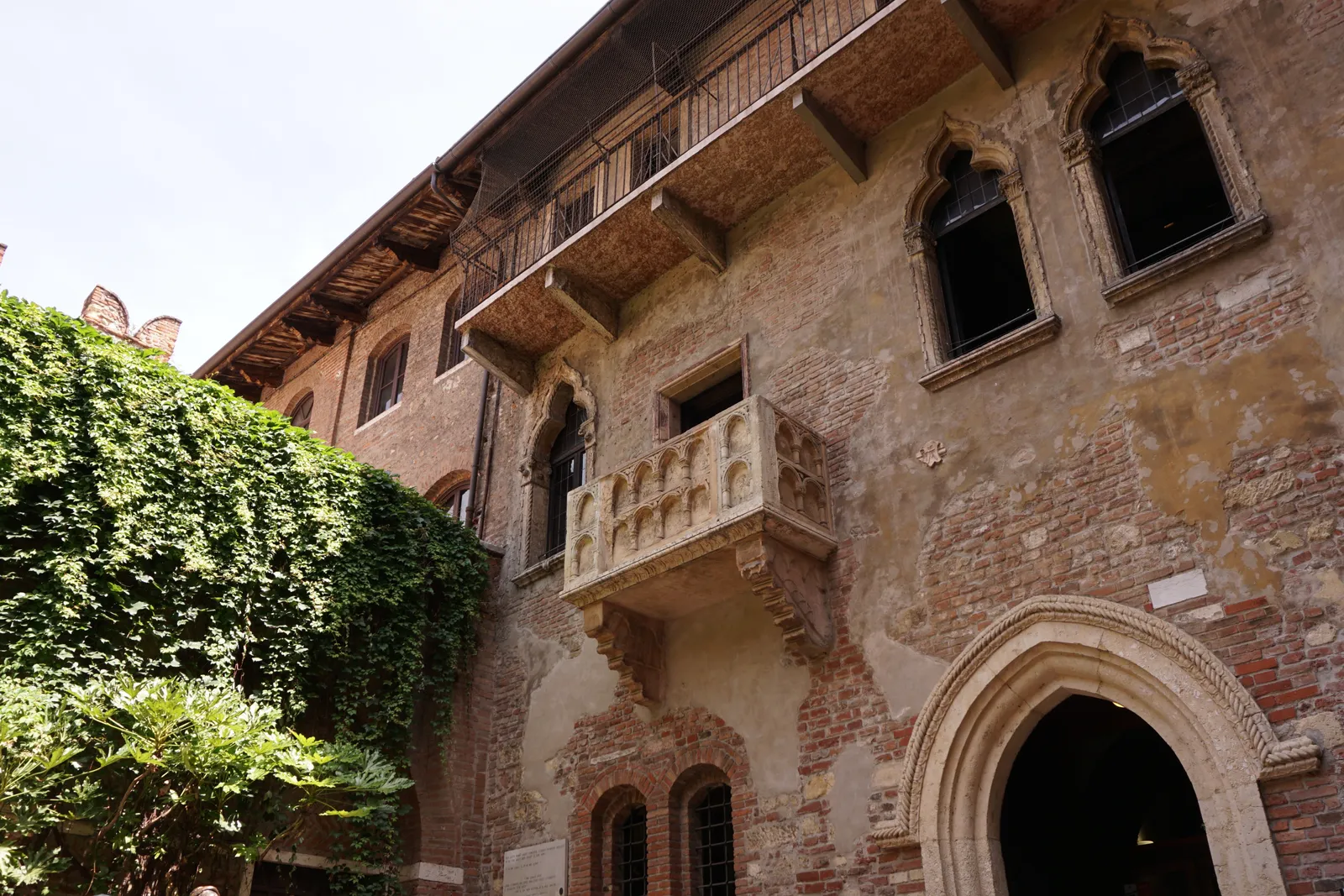
Lake Garda sits so close to Verona that Juliet's House is one of the easiest half-day excursions on the lake — closer for most Garda visitors than the far end of their own shoreline. Peschiera del Garda, the lake's south-eastern gateway, is around 22 kilometres from Verona Porta Nuova by rail, and the train covers it in roughly a quarter of an hour. Yet a surprising number of lake visitors drive, meet Verona's camera-enforced limited-traffic zone, circle for parking, and arrive at their timed entry slot flustered. This guide lays out every practical route from the Garda shore to the Casa di Giulietta entrance at Teatro Nuovo in Piazzetta Navona — train, bus, car, and the combinations that actually work — with honest notes on where the car helps and where it actively hurts.
Why the Lake Garda Day Trip Works So Well
The geography is unusually kind. The southern basin of Lake Garda — Peschiera, Sirmione, Desenzano, Lazise, Bardolino — is the busiest resort stretch of the lake, and it happens to sit directly on the Milan–Venice rail corridor that runs through Verona. That means the journey to Juliet's House is not a winding regional excursion but a short hop on a mainline railway with frequent service through the day. From a hotel in Peschiera you can realistically be standing in the Casa di Giulietta courtyard within an hour of finishing breakfast, and back at the lake for a late-afternoon swim.
The trip pairs naturally with the way Casa di Giulietta now operates. Since 1 April 2026 all entry — to the courtyard and to the house museum — is through the Teatro Nuovo entrance on Piazzetta Navona, with pre-booked timed slots rather than a walk-up queue at the old Via Cappello door. For a day-tripper this is genuinely good news: you book a slot before you leave the lake, you know exactly when you need to be in central Verona, and you can build the rest of the day — the Arena, Piazza delle Erbe, lunch — around a single fixed appointment instead of gambling on a queue of unknown length.
The honest caveat is Verona's traffic regime. The historic centre is a ZTL — a camera-enforced limited-traffic zone — and the quarter around Via Cappello and Piazzetta Navona is fully pedestrianised on top of that. There is no version of this trip in which you drive to the door of Juliet's House. Every route ends with a short walk through the centre, which is exactly how the city intends it. The only real decision is where you leave the car or the train, and that is what the rest of this guide is for.
By Train: Peschiera and Desenzano to Verona Porta Nuova
Peschiera del Garda station is the lake's best asset for this trip. Regional trains on the Milan–Venice line take roughly 13 to 19 minutes to Verona Porta Nuova depending on the service, and there are dozens of departures a day — typically two to three trains an hour through the daytime. The station sits a short, flat walk from Peschiera's old fortress town and its lakefront, so even visitors staying elsewhere on the shore often find it easiest to reach Peschiera first and let the railway do the rest. Tickets for the regional services are inexpensive and rarely sell out; the faster premium trains that stop at Peschiera in summer are pleasant but unnecessary for a hop this short.
Desenzano del Garda–Sirmione station, one stop further west on the same line, serves the lake's south-western resorts and adds only a few minutes to the journey. Despite the name, it is in Desenzano, not Sirmione — a detail that catches people out every season. If you are based in Desenzano itself, the calculation is identical to Peschiera: walk or taxi to the station, then a short mainline run into Verona Porta Nuova. From either railhead the train is almost always faster door-to-door than driving once you account for Verona parking, and it removes the ZTL risk entirely.
At Verona Porta Nuova you are about a 20-minute walk from the Teatro Nuovo entrance in Piazzetta Navona — a straight, pleasant route up Corso Porta Nuova, through the gate into Piazza Bra past the Arena, then along Via Mazzini into the heart of the old town. City buses 11, 12 and 13 run from the station towards Piazza delle Erbe, roughly three minutes on foot from Piazzetta Navona, if you would rather ride. For slot planning, treat the lake-to-courtyard journey as about one hour from Peschiera and a little more from Desenzano: train, walk, and a small buffer for finding the entrance the first time.
From Sirmione, Lazise and Bardolino Without a Car
Sirmione is the awkward one. The famous peninsula has no railway station, and its old town is itself traffic-restricted, so a Verona trip from Sirmione is always a two-stage journey. The standard pattern is the ATV lake-shore bus or a taxi to either Peschiera del Garda or Desenzano station, then the train. Allow 20 to 30 minutes for the road leg to Peschiera in normal traffic — more in July and August, when the lakeside road crawls. Leaving Sirmione early matters: mid-morning traffic out of the peninsula is the single most common reason lake visitors miss comfortable margins on their Verona slot.
The east-shore towns — Lazise, Bardolino, Garda — face a similar choice with a different railhead: ATV buses run down the Gardesana orientale towards Peschiera, where the train takes over. Some east-shore visitors are tempted to stay on a through bus all the way to Verona; direct services exist on some timetables, but the train from Peschiera is faster and far more predictable, and predictability is what a timed entry slot rewards. In high season the seasonal lake ferries can also move you between shore towns and Peschiera or Desenzano, though they are a scenic option rather than a fast one.
One planning note that applies to every car-free route: check the return timetable before you leave, not after dinner in Verona. Evening regional trains back towards Peschiera and Desenzano are frequent but thin out later in the evening, and the last connecting buses along the lake shore finish earlier than the trains do. If you are staying in Sirmione or the east-shore villages and want a full Verona evening — an opera night at the Arena, say — a taxi transfer for the final lakeside leg is often the honest answer, and worth pricing before you commit.
Driving to Verona: The ZTL and the Parking Reality
If you do drive, understand the ZTL before you start the engine. Verona's historic centre — including Piazza Bra, Via Mazzini and the whole quarter around Casa di Giulietta — is a limited-traffic zone enforced by automatic number-plate cameras during daytime hours, and unauthorised entry earns a fine per camera passage, posted to your home address or your rental company months later. The zone's boundaries are signed but easy to cross accidentally, especially following a navigation app that has not been told to avoid it. The working rule for visitors is simple: do not drive past the city walls. Aim for a car park outside the restricted zone and walk in.
The practical parking belt sits just south of the historic core. The garages around the Arena and the Cittadella area, immediately south of Piazza Bra, are the closest sensible options — from there you walk under the Portoni della Bra gate and you are in the pedestrian centre within minutes, about a quarter of an hour on foot from the Teatro Nuovo entrance. Across the river, the Isolo area offers another cluster of parking with a slightly longer approach. All of these fill on summer weekends and on Arena opera evenings, when the whole city converges on Piazza Bra; on those days, arriving before mid-morning or using a park-and-ride further out is the difference between a calm visit and a stressful one.
The honest comparison, having laid all this out: from anywhere in the southern Garda basin, the train beats the car for a Juliet's House day. Driving from Peschiera saves nothing — the road is slower than the railway before you have even started hunting for a space. The car earns its keep only in specific cases: travellers based in small west-shore or north-lake villages with poor bus links, families with mobility needs for whom the garage-to-gate walk is the shortest achievable, or anyone combining Verona with an onward drive the same day. If that is you, park south of Piazza Bra, photograph the garage entrance so you can find it again, and give yourself a full hour between parking and your entry slot.
Timing Your Lake Garda Day Around the Entry Slot
The timed slot is the spine of the day, so book it before you plan anything else. Casa di Giulietta opens at 09:00 Tuesday to Sunday and at 14:00 on Mondays, closing at 19:00, with the last entry sequence running from about 18:30 — the final slots admit through Piazzetta Navona in the closing half-hour and the house clears just before 19:00. For lake day-trippers the sweet spots are the first two hours of the morning, before coach groups thicken the centre, or the last two hours of the afternoon, when the courtyard visibly relaxes and the light on the brick warms up. A late-afternoon slot also lets you do the Arena and Piazza delle Erbe first, so the fixed appointment ends the circuit rather than interrupting it.
Build the margin backwards from the slot. From Peschiera, a train about an hour before entry time is comfortable; from Sirmione or the east shore, add the bus leg and its summer-traffic padding and think in terms of two hours door-to-door. Arriving in central Verona early is never wasted — Piazza delle Erbe, the Lamberti tower and a coffee on Piazza Bra absorb any spare half-hour effortlessly. Arriving late is the one genuinely unrecoverable error, because entry is by reserved time and the courtyard admission runs in short waves rather than a forgiving all-day queue.
Two calendar notes complete the picture. Mondays compress everything: the house opens at 14:00, so a Monday lake trip should be planned as an afternoon-and-evening visit, not a morning one. And on summer opera evenings the whole rhythm of the city shifts — trains and roads into Verona are busy from late afternoon as Arena audiences arrive, then quiet again once the performance starts. If your Garda schedule is flexible, a mid-week non-opera day gives you the calmest run at both the railway and the courtyard; if you deliberately pair Juliet's House with an opera night, book the earliest evening entry slot you can and enjoy the fact that both of the day's fixed points sit five minutes' walk apart.
Frequently asked
How long does it take to get from Lake Garda to Casa di Giulietta?
From Peschiera del Garda, about an hour door-to-door: a 13-to-19-minute train to Verona Porta Nuova, then a 20-minute walk or a short bus ride to the Teatro Nuovo entrance on Piazzetta Navona. From Desenzano add a few minutes; from Sirmione, Lazise or Bardolino allow up to two hours including the bus or taxi leg to the railhead.
Can I drive directly to Juliet's House?
No. The house sits inside Verona's pedestrianised core, which itself sits inside a camera-enforced limited-traffic zone (ZTL). Driving past the city walls without authorisation risks an automatic fine per camera passage. Park in the garages south of Piazza Bra or across the river at Isolo and walk in — about 15 minutes on foot from the Arena-area car parks.
Is the train from Peschiera del Garda better than driving?
Almost always. The regional train reaches Verona Porta Nuova in roughly a quarter of an hour with frequent daytime departures, no ZTL exposure and no parking hunt. Driving only makes sense from poorly connected villages, for mobility reasons, or when Verona is a stop on a longer same-day drive.
Does Sirmione have a train station?
No — this catches many visitors out. The station named Desenzano del Garda–Sirmione is in Desenzano. From Sirmione itself, take the ATV lake-shore bus or a taxi to Peschiera del Garda or Desenzano station, then the train to Verona Porta Nuova. Allow generous time for summer traffic leaving the peninsula.
Is half a day from Lake Garda enough for Juliet's House?
Comfortably. The visit itself takes 45 to 90 minutes including the courtyard, and the compact centre puts the Arena and Piazza delle Erbe within a few minutes' walk. A morning departure from Peschiera gets you the visit plus a proper Verona circuit and still returns you to the lake by late afternoon.
What happens if my train is delayed and I miss my entry time?
Entry is tied to your reserved slot, and admission runs in short timed waves, so build the buffer in rather than counting on flexibility at the gate. Aim to be in central Verona at least 30 minutes before your slot; spare time disappears easily in Piazza delle Erbe. On Mondays remember the house opens at 14:00, not 09:00.