 Zonder wachtrij beschikbaar
 Een zelfgeleide Romeo en Julia wandeltocht door Verona
Zes stops op een 2 uur durende Shakespeare-route door het historische centrum van Verona — Casa di Giulietta, de muur van brieven, Casa di Romeo, de Scaligeri-graven, Julia's graf en Piazza delle Erbe.
Verona heeft rond een toneelstuk dat 400 jaar geleden werd geschreven door een Engelse toneelschrijver die de stad vrijwel zeker nooit bezocht, een van de meest duurzame literaire toeristische routes van Europa gecreëerd. De Romeo en Julia-route slingert in een wandeling van 2 uur door het historische centrum, waarbij authentieke middeleeuwse architectuur, literaire toeristische ingrepen uit de 19e en 20e eeuw en verschillende stops die uitsluitend bestaan omdat Shakespeare zijn toneelstuk in Verona situeerde, worden gecombineerd. Deze gids beschrijft een zelfgeleide route die 's ochtends begint bij Casa di Giulietta, via middeleeuwse steegjes verdergaat naar Casa di Romeo en de Scaligeri-graven, de stad oversteekt naar het graf van Julia in het voormalige klooster van San Francesco al Corso, en eindigt op Piazza delle Erbe. De hele route beslaat ongeveer 2 kilometer over vlakke kasseien en leent zich uitstekend voor een halve dag.
Stop één: Casa di Giulietta en de Muur van Brieven
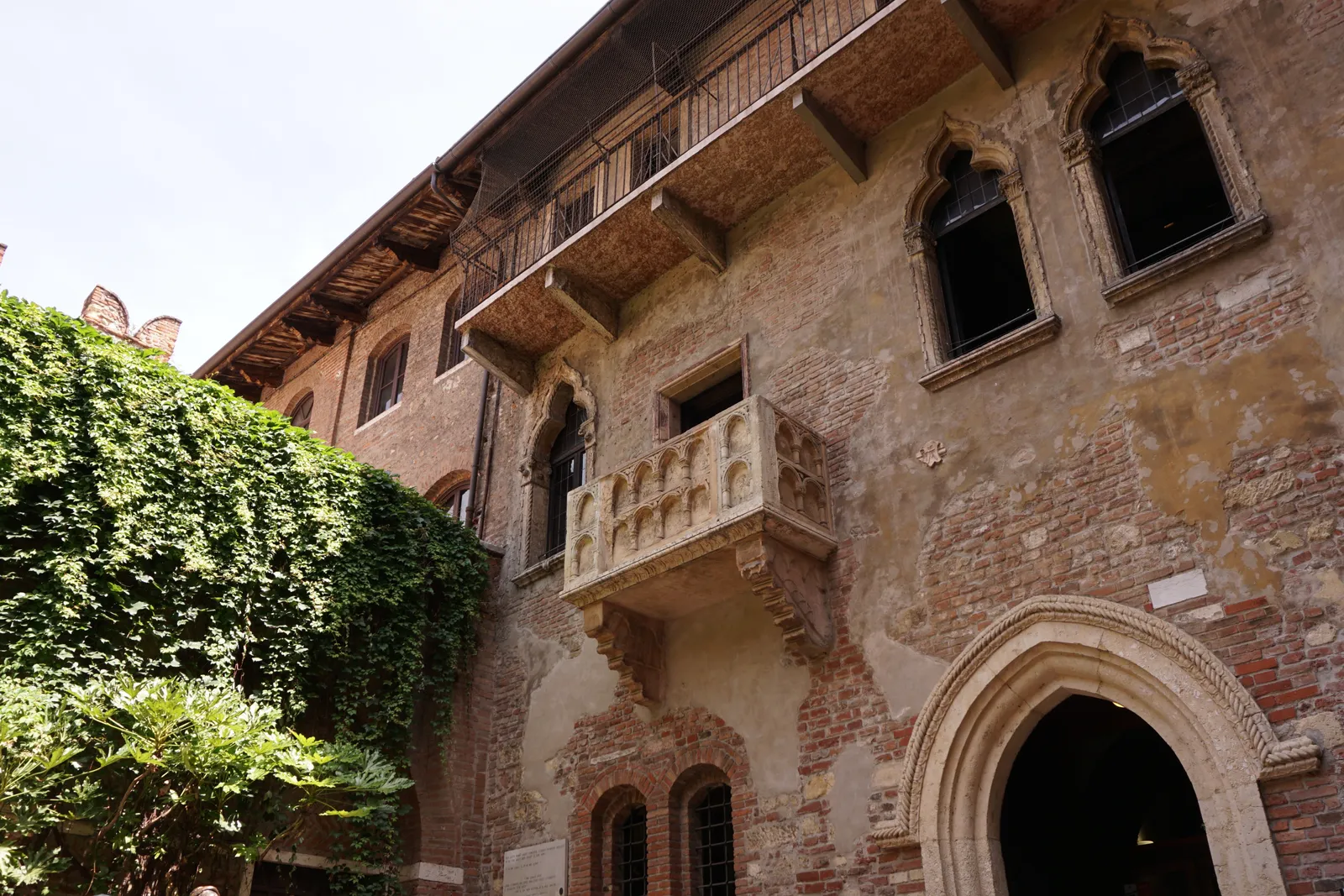
Start om 09:00 bij de opening van Teatro Nuovo op Piazzetta Navona (of om 14:00 op maandag). Casa di Giulietta is de meest tijdrovende stop op de route en vormt het beste het ochtendanker terwijl de binnenplaats nog rustig is. Verken de binnenplaats met het bronzen Julia-beeld, het museuminterieur met de kostuums uit de Zeffirelli-film uit 1968 en de fresco-rijke middeleeuwse kamers, en het balkon zelf in 60 tot 90 minuten. De muur van brieven en de brievenbus van de Club di Giulietta bevinden zich op de binnenplaats — bezoekers die van plan zijn een brief aan Julia achter te laten, moeten papier en een pen meenemen, want de voorraad in de museumwinkel kan halverwege de middag uitgeput zijn.
Verlaat de binnenplaats via de foyer van Teatro Nuovo naar Piazzetta Navona. Sla linksaf uit de foyer en loop een kort stukje terug naar Via Cappello. De volgende stop, Piazza delle Erbe, ligt 2 minuten noordwaarts. Dit eerste deel bepaalt het ritme van de dag — een substantieel museumbezoek gevolgd door een reeks kortere buitenstops, die elk context geven aan wat u net binnen hebt gezien.
Stop twee: Piazza delle Erbe en de Capello-heraldiek
Piazza delle Erbe is het middeleeuwse marktplein van Verona, gebouwd op de rechthoekige plattegrond van het Romeinse forum. De Torre dei Lamberti rijst op aan de oostzijde, de Casa dei Mercanti en het Palazzo Maffei omlijsten de lange as, en de ochtendmarktstalletjes vullen het midden. Op twee minuten lopen van Casa di Giulietta bevindt zich op dit plein ook de oorspronkelijke Capello-familieheraldiek — het hoedvormige embleem op een boogsleutel langs Via Cappello dat 18e-eeuwse reizigers herinterpreteerden als bewijs van de connectie met de Capulets. De boog is zichtbaar vanaf Via Cappello terwijl u noordwaarts naar het plein loopt; pauzeer om het te fotograferen voordat u Piazza delle Erbe betreedt.
Het plein is een goed moment voor een koffie — de cafés aan de noordzijde hebben buitenterrassen die 's zomers de ochtendzon en 's winters de middagzon vangen. De Capello-boog en de middeleeuwse handelsarchitectuur verklaren samen hoe 19e-eeuws literair toerisme Shakespeares fictieve Verona geloofwaardig kon verankeren in echte plaatsen: het middeleeuwse weefsel van Verona is werkelijk rijk genoeg dat elke literaire associatie een architectonische haak kan vinden. Reken hier op 15 tot 20 minuten.
Stop drie: De Scaligeri-graven en Casa di Romeo
Vanaf Piazza delle Erbe neemt u Via Cairoli 200 meter oostwaarts naar de Arche Scaligere — de verfijnde gotische grafmonumenten van de middeleeuwse heersers van Verona, de della Scala (Scaligeri)-familie. De graven worden omsloten door een smeedijzeren hek aan de Via delle Arche Scaligere en zijn gratis te bezichtigen vanaf de openbare straat. Het hangende graf van Cangrande I della Scala (overleden in 1329) boven de aangrenzende kerk Santa Maria Antica is het meest gefotografeerde monument van de groep. De Scaligeri regeerden over Verona in de 13e en 14e eeuw en komen expliciet voor in Shakespeares toneelstuk als de Prins van Verona — Bartolomeo II della Scala is de historische figuur die het vaakst wordt genoemd als inspiratiebron.
Casa di Romeo ligt enkele stappen verder langs de Via delle Arche Scaligere. De bakstenen gotische gevel en de gemeentelijke plaquette zijn zichtbaar vanaf de straat; het gebouw is een privéwoning zonder openbare toegang. Bezoekers fotograferen de gevel, lezen de plaquette en lopen verder. De gecombineerde stop bij de Arche Scaligere en Casa di Romeo duurt 20 tot 30 minuten, langer als u de gotische details van de graven wilt bestuderen.
Stop vier: Het Graf van Julia (Tomba di Giulietta)
Het Graf van Julia is een aparte stedelijke locatie aan de zuidkant van het historische centrum, op ongeveer 10 tot 15 minuten lopen van Casa di Romeo. Het bevindt zich in de kloostergang van het voormalige klooster San Francesco al Corso — Via del Pontiere 35 — en wordt beheerd door Musei Civici di Verona als een klein museum gewijd aan de Shakespeare-associatie en aan lokale 19e-eeuwse kunst. Het vermeende graf zelf is een stenen sarcofaag in een stille gewelfde crypte; net als Casa di Giulietta is de connectie met Shakespeares plot een 19e- en 20e-eeuwse literair-toeristische constructie die over een echt middeleeuws gebouw is gelegd. De locatie heeft een aparte entreeprijs, los van Casa di Giulietta, en is een minder bezochte stop op de route.
Bezoekers die de volledige Shakespeare-route doen, waarderen het Graf van Julia omdat het de verhaallijn compleet maakt — Casa di Giulietta als de ontmoetingsplek en het balkon, Casa di Romeo als het huis dat hij verlaat, en het Graf van Julia als het einde. De locatie omvat ook een kleine kunstcollectie met fresco's van Antonio Badile (de meester van Veronese), afkomstig uit een ontheiligde kerk, wat het bezoek culturele diepgang geeft naast de Shakespeare-associatie. Reken op 30 tot 45 minuten. Controleer de actuele openingstijden bij Musei Civici di Verona — het schema van deze locatie kan afwijken van dat van Casa di Giulietta.
Stop vijf: Terug naar Piazza Bra voor lunch en de Arena
Loop terug van het Graf van Julia door de middeleeuwse steegjes naar Piazza Bra, het brede ovale plein dat wordt gedomineerd door het 1e-eeuwse Romeinse amfitheater, bekend als de Verona Arena. De wandeling duurt ongeveer 15 minuten door enkele van de rustigste middeleeuwse straten van Verona. Piazza Bra heeft de hoogste concentratie restaurants en cafés van de stad; de zuidelijke arcade en de bars langs de zuidelijke rand van het plein zijn de populairste lunchplekken. Een typische Romeo-en-Julia-route lunch neemt hier een uur in beslag.
De Verona Arena zelf ligt in het midden van het plein. Gebouwd in de 1e eeuw na Christus, is het het op twee na grootste Romeinse amfitheater in Italië, na het Colosseum en het amfitheater van Capua, en het herbergt nog steeds het zomeroperaseizoen van de Verona Arena van half juni tot begin september. Het interieur is overdag toegankelijk voor bezoekers met een apart ticket, los van de andere locaties van Musei Civici di Verona. Reken op 45 tot 60 minuten voor het interieur van de Arena. Met Casa di Giulietta, Casa di Romeo, de Arche Scaligere, het Graf van Julia en de Arena gecombineerd, heeft u een complete ochtend van 4 tot 5 uur in Verona.
Veelgestelde vragen
Hoe lang duurt de volledige wandelroute?
Ongeveer 2 uur voor alleen de Romeo-en-Julia-stops — Casa di Giulietta, de Capello-boog, Arche Scaligere, Casa di Romeo en het Graf van Julia. Voeg 1 tot 2 uur toe voor lunch en de Verona Arena voor een complete halve dag.
Is de route beloopbaar?
Ja — ongeveer 2 kilometer over vlakke kasseien door het voetgangersgebied van het historische centrum. Het enige deel buiten de historische kern is de wandeling naar het Graf van Julia aan de Via del Pontiere, die over glad wegdek loopt.
Welke tickets heb ik nodig?
Casa di Giulietta vereist een ticket met gereserveerd tijdslot via Teatro Nuovo. Het Graf van Juliet is een apart ticket van Musei Civici di Verona. De Verona Arena is opnieuw een apart ticket. De Arche Scaligere zijn vanaf de straat gratis te bekijken; Casa di Romeo is alleen de buitenkant en gratis.
Kan ik de route in omgekeerde volgorde doen?
Ja, maar de praktische aanpak is om bij Casa di Giulietta te beginnen, omdat de binnenplaats het rustigst is bij de opening om 09:00 uur en het museum de meest tijdrovende stop is. De route omkeren brengt het risico met zich mee dat u op het drukste moment van de dag aankomt.
Is de Tombe van Julia een bezoek waard?
Als u Casa di Giulietta heeft bezocht en de verhaallijn wilt afronden, ja. Heeft u beperkte tijd, dan is dit de minst prioritaire Shakespeare-stop, omdat de locatie klein is en de connectie met het toneelstuk het meest expliciet 20e-eeuws geconstrueerd is van alle stops op de route.
Zijn er begeleide versies van deze wandeling beschikbaar?
Ja — erkende privégidsen uit Verona bieden 2 uur durende Romeo en Julia-themawandelingen aan. Deze worden geregeld via erkende lokale operators, niet bij een museumingang.
Waar bevindt zich de heraldische boog van de familie Capello?
Aan de Via Cappello, vlakbij de kruising met Piazzetta Navona — de sluitsteen van een boog draagt een hoedvormig symbool (capello betekent 'hoed' in het oude Italiaans). De boog is zichtbaar vanaf straatniveau wanneer u noordwaarts loopt van Casa di Giulietta naar Piazza delle Erbe.
Kan ik Castelvecchio op dezelfde dag bezoeken?
Ja. Castelvecchio ligt 10 minuten ten westen van Piazza Bra aan de Adige en herbergt het belangrijkste stedelijke museum van Verona. Dit verlengt de dag tot 6 tot 7 uur in totaal — haalbaar als u om 09:00 uur begint en de lunch strak plant.
Is de wandeling ook na zonsondergang mogelijk?
De buitenlocaties — Casa di Romeo, de Arche Scaligere, de Capello-boog, Piazza delle Erbe — zijn allemaal na zonsondergang te bezichtigen en het historische centrum is goed verlicht en veilig. Casa di Giulietta en de Tomba di Giulietta sluiten respectievelijk om 19:00 en 18:00 uur, dus de museumstops vereisen een bezoek overdag.
Zijn de kasseien moeilijk begaanbaar voor rolstoelen of kinderwagens?
De kasseien in het historische centrum zijn glad en strak gelegd, en de route is vlak. Rolstoelen en kinderwagens kunnen de buitenlocaties zonder problemen aan. De binnenkant van Casa di Giulietta heeft alleen trappen naar de bovenverdiepingen, en de gewelfde crypte van de Tomba di Giulietta heeft treden.